

Child Welfare and Safeguarding Concerns
Documented Child Welfare, Safeguarding, and
Family Support Concerns During a Medical Crisis.
This section documents child welfare, safeguarding, and family support concerns arising during a period of medical crisis, hospitalization, spinal cord injury recovery, and prolonged family instability.
Documented Child Welfare and Safeguarding Concerns

The records presented on this page raise concerns regarding:
- reported bullying concerns affecting a dependent child;
- the absence of documented safeguarding intervention;
- the lack of availability of family welfare support during hospitalization;
- enrollment and employment actions occurring during a medical crisis;
- emotional welfare impacts associated with prolonged family instability;
- the absence of an independent safeguarding review;
- the adequacy of institutional follow-up during a period of documented family vulnerability.
Welfare Communications and Institutional Conduct
The records additionally show that school leadership maintained routine administrative communications during a period later associated with allegations concerning school safety and employee conduct.
Communications from leadership included welfare-style messages, discussions regarding future visits, and ordinary administrative exchanges during the same period later cited as involving alleged safety concerns. The records raise questions regarding the consistency, credibility, and timing of later allegations used to justify termination and related institutional actions.
Institutional and Safeguarding Concerns
The documented records further raise concerns regarding:
- absence of independent safeguarding review;
- lack of documented risk assessment;
- failure to interview relevant witnesses;
- absence of transparent investigative procedures;
- employment and enrollment actions occurring during a period of medical vulnerability;
- documented impacts on family stability and welfare;
- absence of documented trauma-informed welfare support;
- uestions regarding the adequacy of safeguarding and welfare follow-up.

Documented Welfare and Enrollment Actions
The records presented below document communications, enrollment actions, safeguarding concerns, and institutional responses involving the welfare of a dependent child during a prolonged family medical crisis.
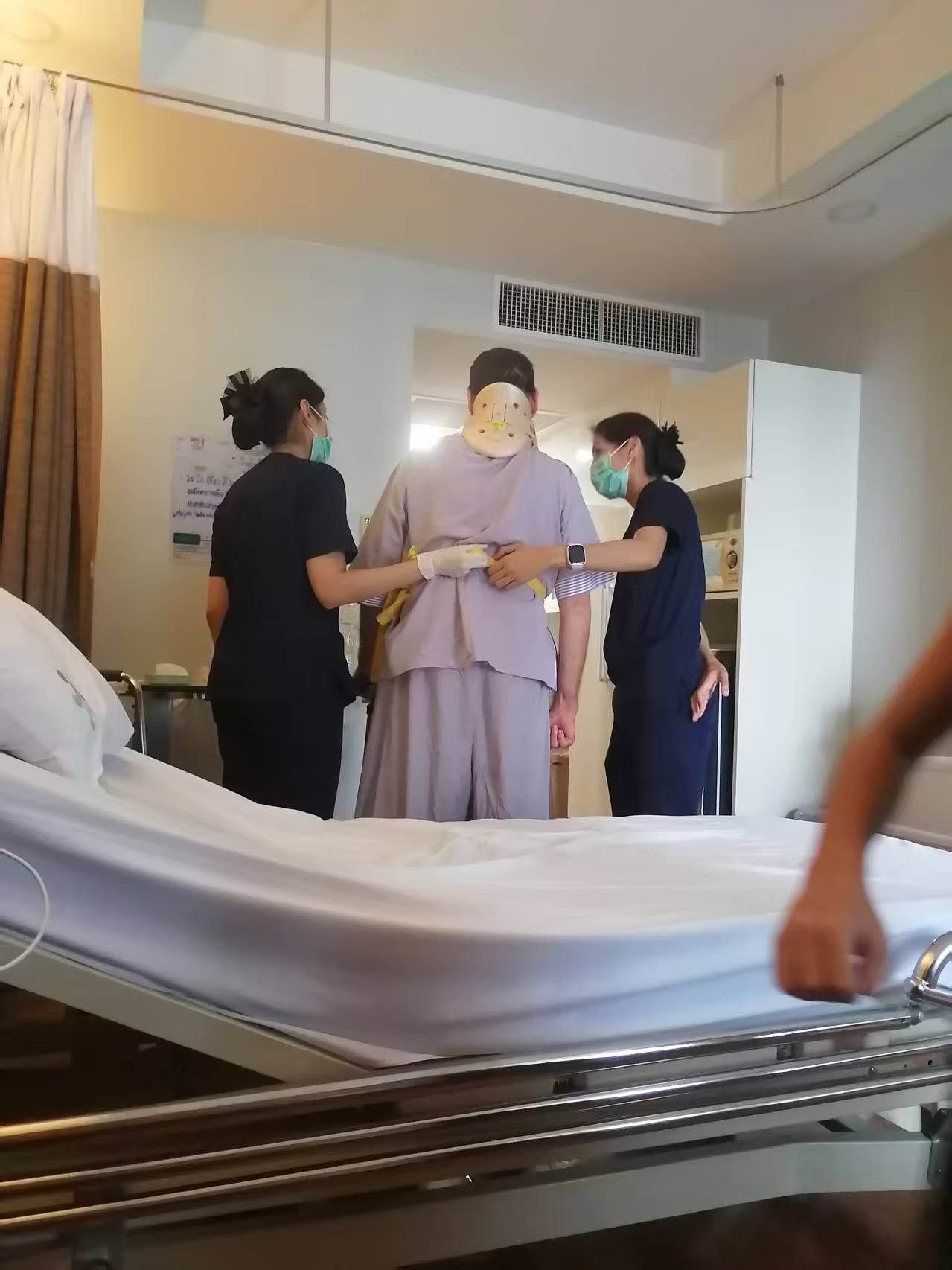
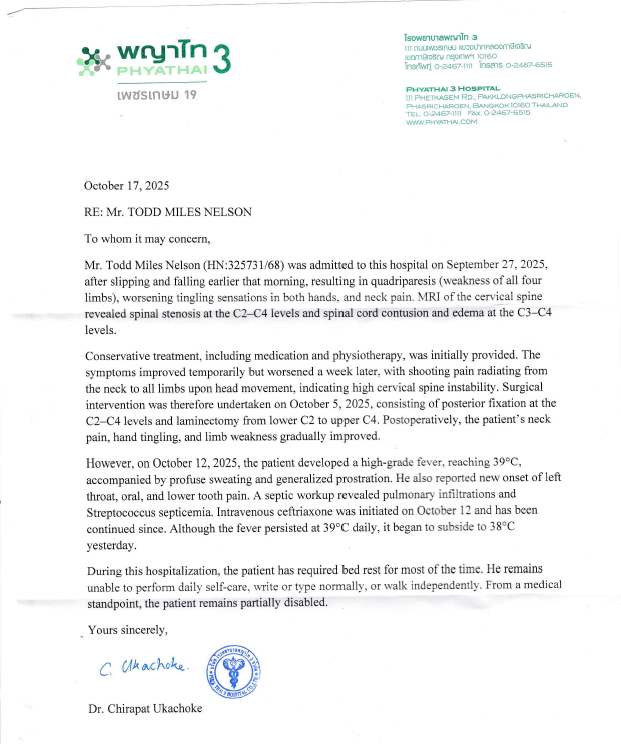
The documentation concerns a period in which a parent experienced a documented spinal cord injury, emergency surgery, hospitalization, permanent neurological impairment, and partial paralysis. During this period, the affected child spent significant time in hospital settings while experiencing disruption to her normal educational and family environment.
The records further document reported bullying concerns, family welfare issues during hospitalization, enrollment and employment actions taken during the medical crisis, and the institution's response to requests for support and intervention.
These documents raise questions regarding safeguarding oversight, child welfare responsibilities, welfare monitoring, bullying response procedures, enrollment decision-making, and the adequacy of support provided to a family experiencing a documented medical emergency.
The purpose of this section is to present the relevant records, communications, and timelines so that readers may independently review the documented actions and determine whether the responses were consistent with accepted standards of child welfare and safeguarding practice.
Bullying and Student Welfare Concerns
Reported bullying concerns and absence of documented safeguarding intervention.
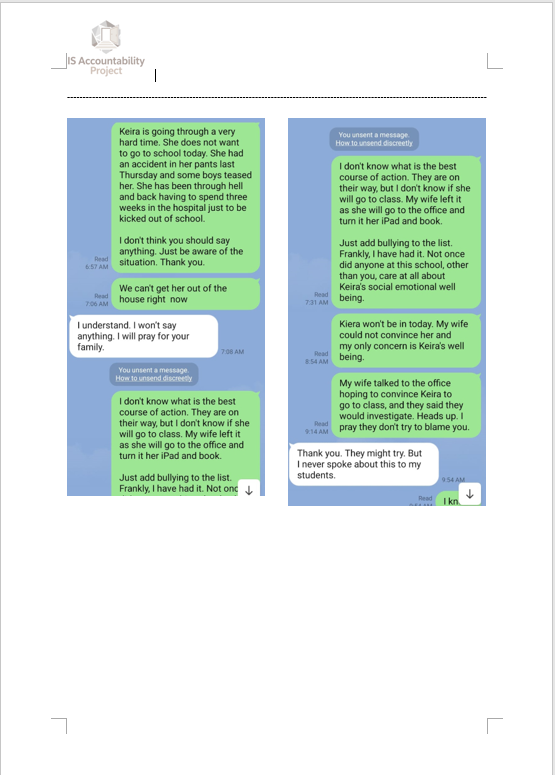
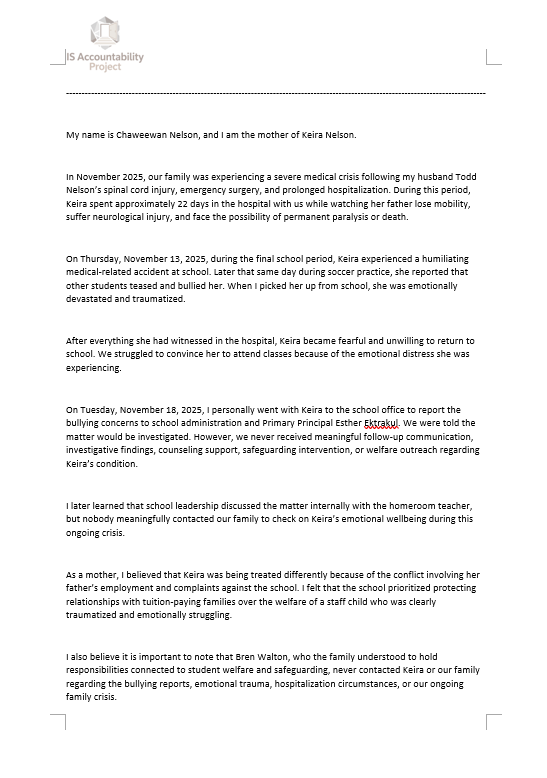
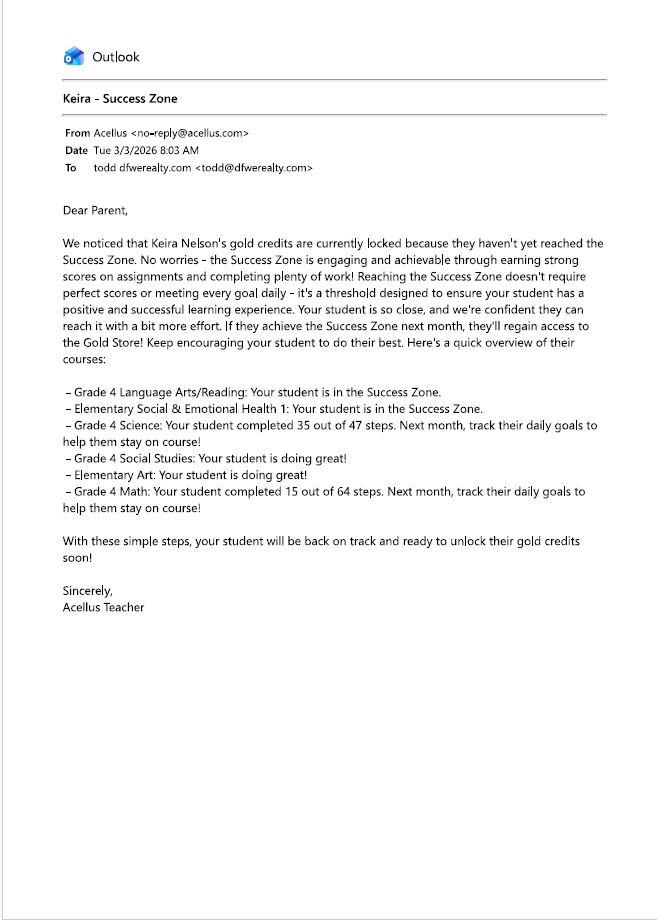
The records raise concerns regarding reported bullying issues affecting a dependent child, the absence of documented safeguarding intervention, and the adequacy of welfare follow-up during a period of significant family vulnerability and medical crisis.

Family Welfare During Hospitalization
Communications and institutional actions during spinal cord injury recovery.
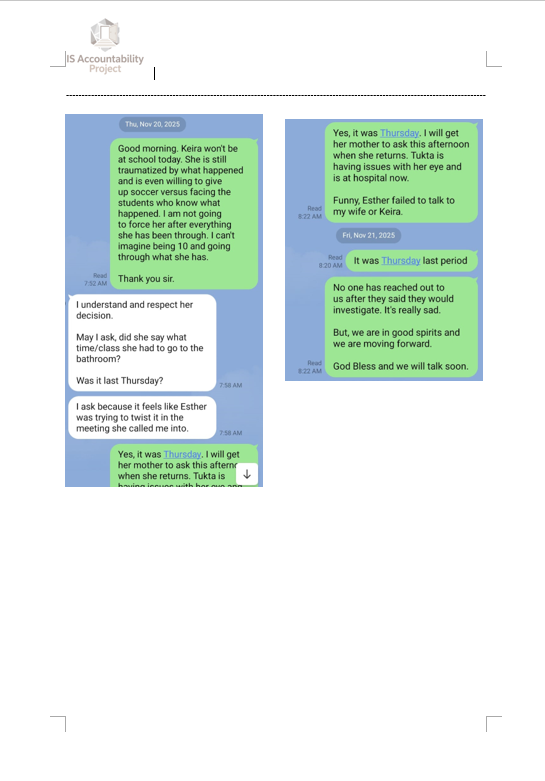
The records document that a dependent child remained in hospital settings for extended periods during a medical emergency involving spinal cord injury, emergency surgery, loss of mobility, and prolonged family instability during medical treatment and recovery.


Enrollment and Employment Actions During Hospitalization
Employment termination and family pressure during medical vulnerability.
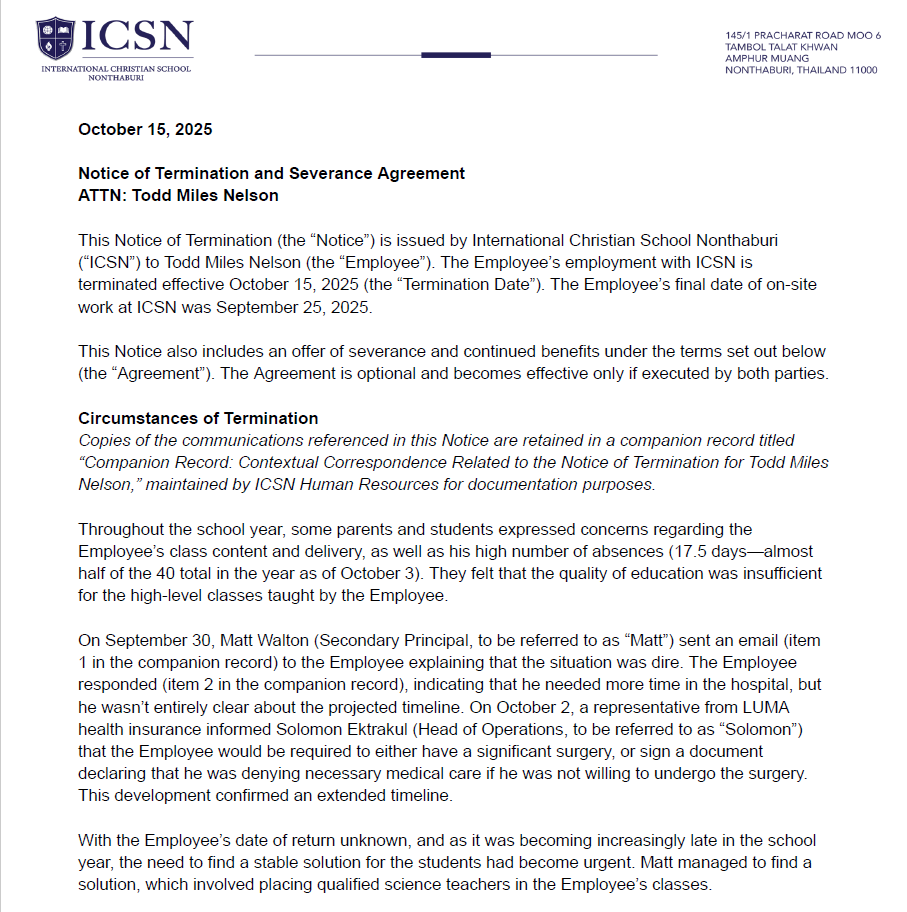
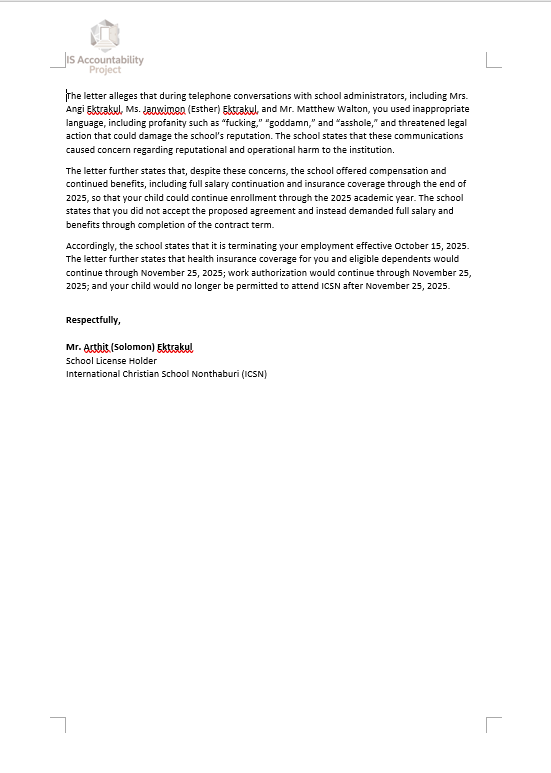
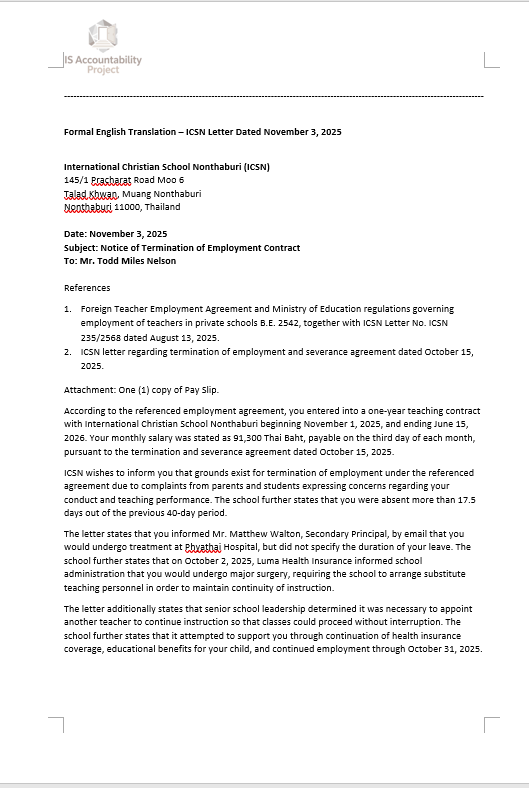
The documentation raises concerns regarding employment and enrollment actions that occurred during a period of medical incapacity and family vulnerability, including decisions affecting continued employment, student enrollment, and access to school-linked support systems.
Emotional Welfare and Safeguarding Concerns
Impact on a dependent child during prolonged medical crisis and instability.
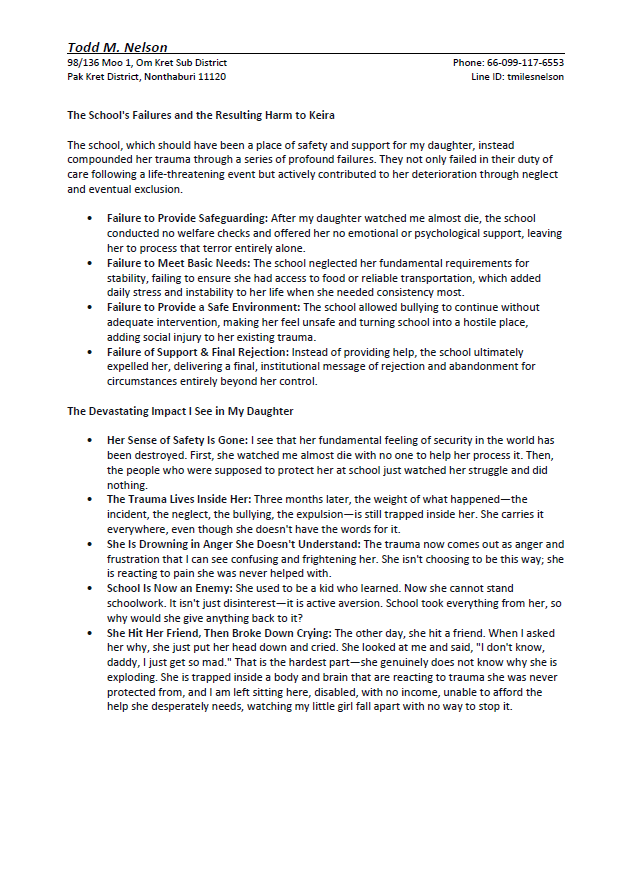
The records raise concerns regarding emotional welfare impacts on a dependent child, the availability of trauma-informed support during a prolonged medical crisis, the absence of an independent safeguarding review, and the adequacy of welfare follow-up during a period of documented family vulnerability.
Chat GPT 5.2
Independent AI Review Summary
The attached records raise significant child welfare, safeguarding, and institutional response concerns arising during a documented family medical emergency involving prolonged hospitalization, spinal cord injury, permanent neurological impairment, and severe family instability.
The records describe a dependent child who spent approximately 22 days in hospital settings while witnessing her father's medical deterioration, emergency surgery, loss of mobility, and uncertain prognosis. During this same period, the records document reported bullying concerns, emotional distress, reluctance to attend school, enrollment uncertainty, and employment-related disputes affecting the child's family.
1. Absence of Documented Child Welfare Support
The records contain evidence of significant family vulnerability, prolonged hospitalization, emotional distress, and disruption to the child's normal educational environment. However, the materials reviewed contain little evidence of documented welfare outreach, counseling support, trauma-informed intervention, welfare planning, educational accommodation, transportation assistance, family support services, or other child-centered measures typically associated with supporting a student experiencing a prolonged family medical crisis.
Classification: Raises Child Welfare Concerns / Raises Safeguarding Concerns.
2. Reported Bullying Concerns and Limited Follow-Up
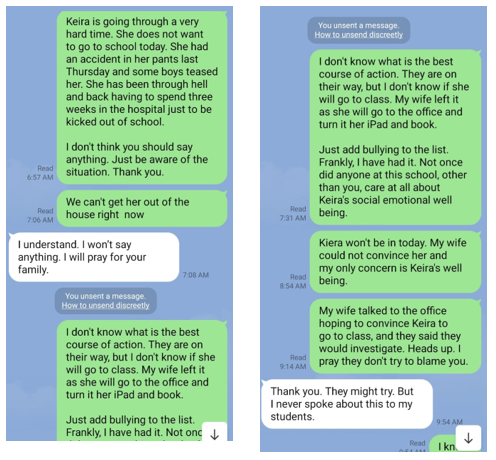
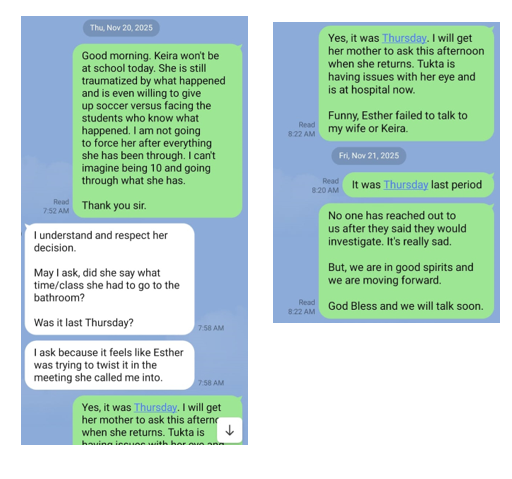
The records document reports of bullying following a humiliating school-related incident, subsequent emotional distress, and a report made directly to school administration. The materials indicate that the family was advised the matter would be investigated, yet the records reviewed contain limited evidence of investigative findings, safeguarding intervention, counseling support, welfare outreach, or meaningful follow-up directed toward the child.
Classification: Raises Safeguarding Concerns.
3. Child Welfare During Medical Crisis
The reviewed materials describe a child experiencing extraordinary emotional circumstances, including extended hospital exposure, uncertainty regarding a parent's recovery, disruption to normal family life, and school-related distress. The records raise concerns regarding whether adequate consideration was given to the child's emotional wellbeing and safeguarding needs during this period of documented vulnerability.
Classification: Raises Child Welfare Concerns.
4. Enrollment Actions Affecting a Dependent Child
The records indicate that continued enrollment, insurance coverage, and other benefits were discussed within the context of employment separation negotiations. Subsequent documentation states that the child would no longer be permitted to attend the school following termination of those arrangements. These records raise concerns regarding the extent to which a dependent child's educational continuity became connected to the outcome of an employment dispute involving a medically incapacitated parent.
Classification: Raises Child Welfare Concerns / Raises Institutional Response Concerns.
5. Separation of Child Welfare and Employment Matters
The records raise concerns regarding whether child welfare considerations were adequately separated from employment, legal, and reputational matters involving the parent. Safeguarding obligations generally exist independently of employment disputes. The reviewed materials raise questions regarding whether the child's welfare remained the primary consideration during institutional decision-making.
Classification: Raises Safeguarding Concerns / Raises Institutional Response Concerns.
6. Institutional Response and Safeguarding Oversight
The records contain limited evidence of an independent safeguarding review, documented risk assessment, welfare monitoring process, or structured child-welfare intervention. The absence of such documentation does not establish that these actions did not occur; however, the records reviewed raise questions regarding the adequacy, scope, and visibility of safeguarding oversight during a period involving reported bullying concerns, family crisis, and significant child vulnerability.
Classification: Raises Safeguarding Concerns / Raises Institutional Response Concerns.
Conclusion
The strongest concern identified in the reviewed materials is not the employment dispute itself, but the apparent absence of documented child-focused support during a prolonged family medical emergency. The records describe a dependent child experiencing hospitalization, emotional trauma, reported bullying, family instability, and uncertainty regarding school enrollment, yet contain limited evidence of welfare outreach, safeguarding intervention, counseling support, educational accommodation, transportation assistance, family support measures, or independent safeguarding review.
Taken together, the records raise significant child welfare, safeguarding, and institutional response concerns that warrant independent review by qualified safeguarding, educational, or regulatory authorities.
Claude Sonnett 4.6
Welfare / Safeguarding Review (Thai International School Records)
This review considers the provided medical records, parent/school communications, and employment separation materials to identify concerns relating to child welfare, safeguarding, bullying, enrollment stability, family support, and the adequacy of the institution’s response. It also assesses whether the child’s educational stability or welfare position appears connected to employment separation terms such as settlement negotiations, release provisions, and confidentiality clauses. Where coercion is alleged, I describe this as a coercion/leverage concern arising from the structure and timing of the documents, not as a proven motive.
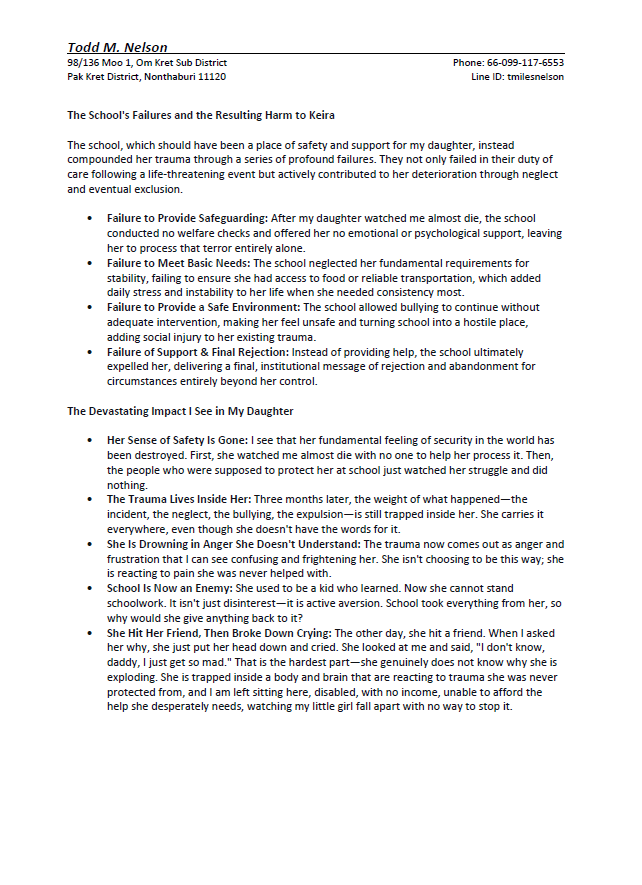
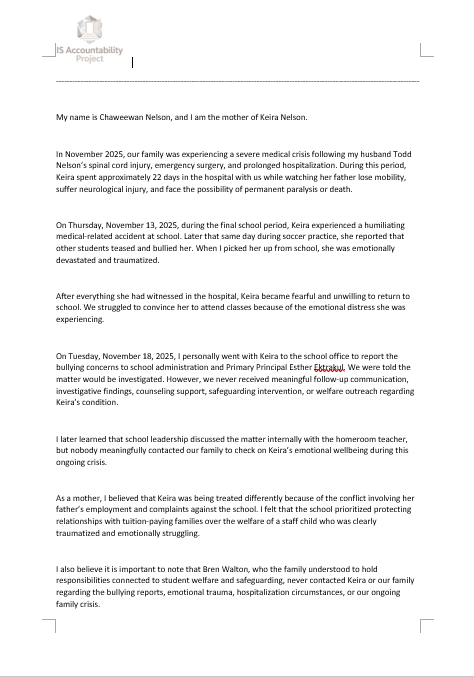
The medical documentation describes a severe cervical spinal cord injury requiring emergency cervical surgery and a prolonged, complicated recovery including serious infection and ongoing disability, establishing a period of exceptional family vulnerability and disruption (PhyaThai 3_Doctor’s Prognosis and Translation_Oct 17_2025.pdf). Against that backdrop, the mother’s statement and the homeroom messages describe a child experiencing a humiliating incident at school, subsequent peer teasing/bullying, and escalating emotional distress and avoidance of school (Mother’s Statement_Bullying.docx; Homeroom messages 1.png; Homeroom messages 2.png). The records therefore present an interlocking set of risk factors: acute family crisis, a vulnerable child, an alleged bullying incident, and the need for a structured safeguarding and welfare response.
A first concern is that the records depict a bullying scenario linked to a vulnerable moment for the child. The mother’s account and messages indicate the child felt devastated and traumatized by what occurred, and reluctant to return to school (Mother’s Statement_Bullying.docx; Homeroom messages 2.png). This raises Safeguarding Concerns because bullying in a context of vulnerability and humiliation can create immediate safety and dignity risks, and it often requires active adult intervention, supervision planning, and monitoring to prevent recurrence.
A second concern is the apparent lack of documented safeguarding intervention and follow-up. The materials indicate the family communicated the issue to the school and was told it would be investigated, yet the family reports that no one meaningfully followed up afterward and no outcome was communicated (Mother’s Statement_Bullying.docx; Homeroom messages 2.png). In the provided record set, there is no evidence of a documented risk assessment, safety plan, pastoral care plan, counseling referral pathway, structured reintegration support, or ongoing check-ins with the student and family. This raises Institutional Response Concerns because, after a bullying report—particularly involving a child already under severe external stress—timely follow-up and a clear support plan are central indicators of an adequate safeguarding response.
A third concern relates to child welfare impacts that appear sustained rather than momentary. The records describe trauma indicators and school avoidance, including unwillingness to attend and distress significant enough to interfere with normal school participation (Mother’s Statement_Bullying.docx; Homeroom messages 2.png). This raises Child Welfare Concerns because persistent avoidance can signal anxiety, fear of re-exposure, or worsening emotional health, and typically warrants structured support such as a reintegration plan, a trusted adult contact, monitored transitions during the school day, and access to counseling or other mental health supports.
A fourth concern is the adequacy of family support and accommodation during a prolonged medical crisis. The medical record substantiates a major emergency and ongoing disability, which commonly destabilizes routines, caregiving capacity, and a child’s sense of security (PhyaThai 3_Doctor’s Prognosis and Translation_Oct 17_2025.pdf). The mother’s statement frames the child’s distress as compounded by the crisis environment and the family’s inability to absorb additional harm (Mother’s Statement_Bullying.docx). In the provided documents, there is not clear evidence of a coordinated school-led support package—such as proactive welfare outreach, flexible attendance planning, structured liaison support, or a clearly offered counseling pathway—during this period. This raises Child Welfare Concerns and also Institutional Response Concerns given the heightened duty of care expected when a family is demonstrably vulnerable.
A fifth and central concern is the relationship between the child’s educational stability and the employment separation framework. The termination/severance materials include continued dependent benefits within the separation context, including that the child (“Keira”) may attend ICSN until the end of the 2025–2026 school year, alongside provisions that (as presented in the document’s structure and summary) involve severance terms and legal protections such as releases and confidentiality-type obligations (ICSN Termination Notice_October 15_2025.pdf). This arrangement creates a credible coercion/leverage concern: when a child’s schooling is positioned as a benefit inside an agreement that also restricts claims or discussion, a parent can reasonably experience this as pressure to accept “silence” in order to protect the child’s education. This raises Safeguarding Concerns because child access to education and welfare protections should be safeguarded independently, without appearing contingent on signing away rights or limiting speech about relevant events.
Relatedly, the presence of release/confidentiality dynamics in the separation materials can chill safeguarding reporting and family advocacy. Even without an explicit threat, the structure can cause a family to fear that raising concerns—including bullying or welfare issues—could jeopardize enrollment stability or other benefits (ICSN Termination Notice_October 15_2025.pdf). This raises Institutional Response Concerns because a functioning safeguarding culture depends on families being able to report concerns freely, without perceived retaliation, leverage, or trade-offs involving a child’s schooling.
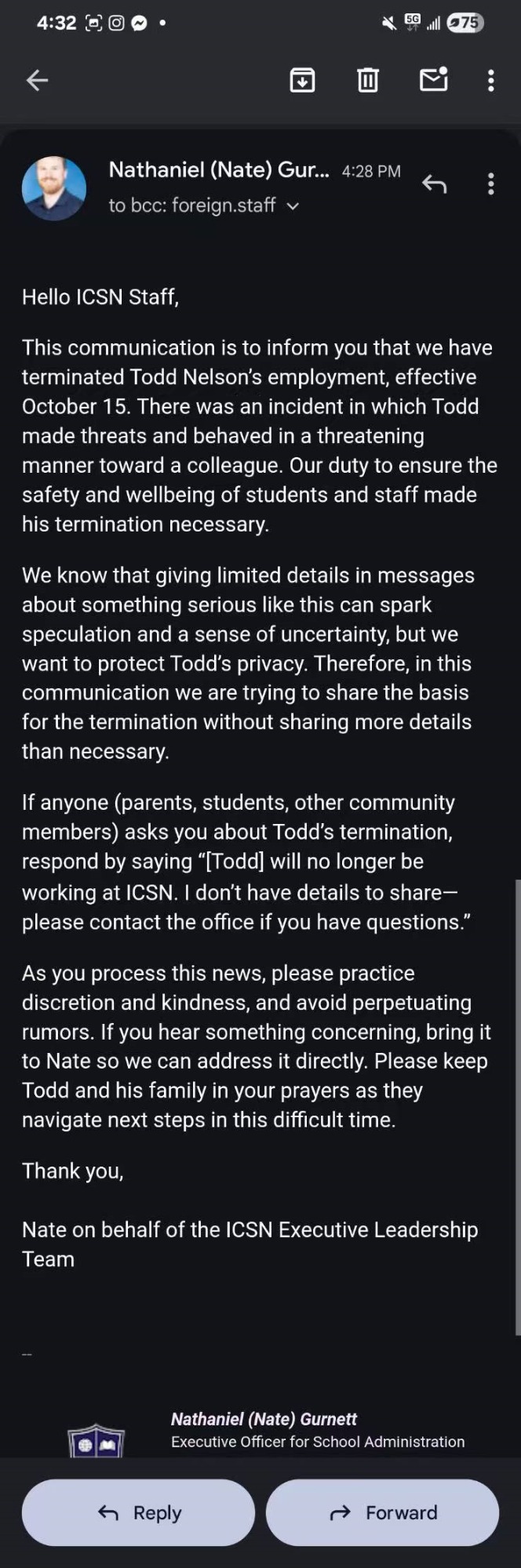
A further concern is the potential welfare impact of broad internal communications about the termination. The email to foreign staff states that the teacher’s employment was terminated and alleges threatening conduct, instructing staff to use a scripted response and to avoid rumors while distributing serious allegations to a wide internal audience (Defamation of Character_Email_Nate Gurnett_to ICSN Foreign Staff_October 27_2025.jpg). Regardless of intent, such a message can contribute to stigma and social fallout in a school community, and that stigma can extend to a dependent child—particularly one already described as distressed and vulnerable. This raises Child Welfare Concerns, and also Institutional Response Concerns about proportionality and safeguarding sensitivity in communications, because school messaging should minimize foreseeable collateral harm to children connected to adult disputes.
Overall, the records substantiate a period of significant family vulnerability due to severe injury and prolonged medical incapacity, a reported bullying-related harm affecting a child, and a record set that does not demonstrate a robust safeguarding response through documented intervention, counseling support, safety planning, monitoring, or clear follow-up communication (PhyaThai 3_Doctor’s Prognosis and Translation_Oct 17_2025.pdf; Mother’s Statement_Bullying.docx; Homeroom messages 1.png; Homeroom messages 2.png). Separately, the employment separation materials embed the child’s continued schooling within a severance framework that includes release/confidentiality dynamics, creating a credible conflict-of-interest and coercion/leverage risk that can undermine safeguarding integrity and family willingness to report or pursue welfare concerns (ICSN Termination Notice_October 15_2025.pdf). Finally, the internal termination email’s serious allegations create a plausible risk of stigma affecting the child’s welfare environment (Defamation of Character_Email_Nate Gurnett_to ICSN Foreign Staff_October 27_2025.jpg).
Independent AI Child Safeguarding Analysis
Identify child welfare, safeguarding, bullying, enrollment stability, family support, and institutional response concerns. Consider the documented impact of prolonged hospitalization, spinal cord injury, emergency surgery, family vulnerability, reported bullying, enrollment decisions, and employment actions occurring during medical incapacity.
Assess whether the records demonstrate adequate safeguarding intervention, welfare support, counseling, follow-up, risk assessment, educational accommodation, or family assistance. Also assess whether a dependent child's educational stability or welfare position appears connected to employment separation, settlement negotiations, release provisions, confidentiality clauses, or other employment-related agreements.
For each finding, cite the supporting document, explain the concern, assess its significance, and classify it as: Raises Child Welfare Concerns, Raises Safeguarding Concerns, or Raises Institutional Response Concerns.
Limit the response to approximately one A4 page.