

Medical Insurance & Benefits
Coverage, Benefits, Insurance Continuity, and Employee Protections
Records include insurance policies, coverage documentation, benefit communications, reimbursement procedures, dependent coverage records, and related materials concerning insurance continuity, employee protections, and access to medical treatment.
Medical Insurance Failures & Documented Costs
Documented records relating to insurance activation, coverage limitations, reimbursement requirements, out-of-pocket medical expenses, treatment access, benefit continuity, and communications regarding insurance coverage during a medical emergency
Insurance Timeline & Access Failures
Weeks 1–5: No Functional Coverage
- no active medical insurance access
- medical care dependent on out-of-pocket payment
- treatment delays and uncertainty regarding coverage
- no clear coverage pathway during urgent medical need
Weeks 6–12: Limited Access & Hidden Costs
- reimbursement-only system requiring upfront payment
- undisclosed outpatient limits and coverage caps
- treatment costs paid before reimbursement
- escalating uncovered medical expenses
- significant unreimbursed outpatient costs
Out-of-Pocket Medical Costs
- documented out-of-pocket medical expenses
- significant medical costs incurred before reimbursement
- emergency treatment requiring upfront payment
- reimbursement delays and financial burden
- documented financial impact of coverage limitations
Promised Help vs Actual Support
- requests for assistance during medical crisis
- assurances of help and support communications
- only assistance offered: payday loan
- no functional insurance solution provided
- concerns regarding insurance continuity during treatment
Insurance Policy Knowledge and Coverage Disclosures
- Undisclosed outpatient coverage limitations
- Questions regarding policy terms and benefit caps
- Insurance-related communications during active treatment
- Documentation concerning coverage activation and continuity
- Comparison of policy documents and employee communications.
Insurance Communications and Coverage Documentation
Documented emails, insurance materials, posted benefit information, reimbursement procedures, coverage communications, and records relating to medical access, costs, and insurance continuity.
Communications reproduced on this page were provided by a former educator and are presented as documentary evidence relating to insurance access, coverage, reimbursement procedures, and benefit continuity.



Chat GPT 5.2
Independent AI Insurance Analysis
Finding 1 – Insurance Coverage Promised but Not Immediately Available
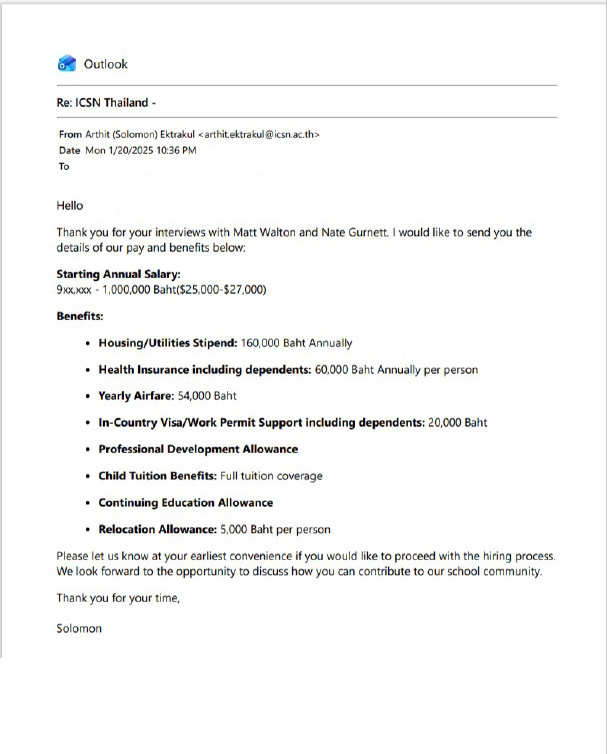
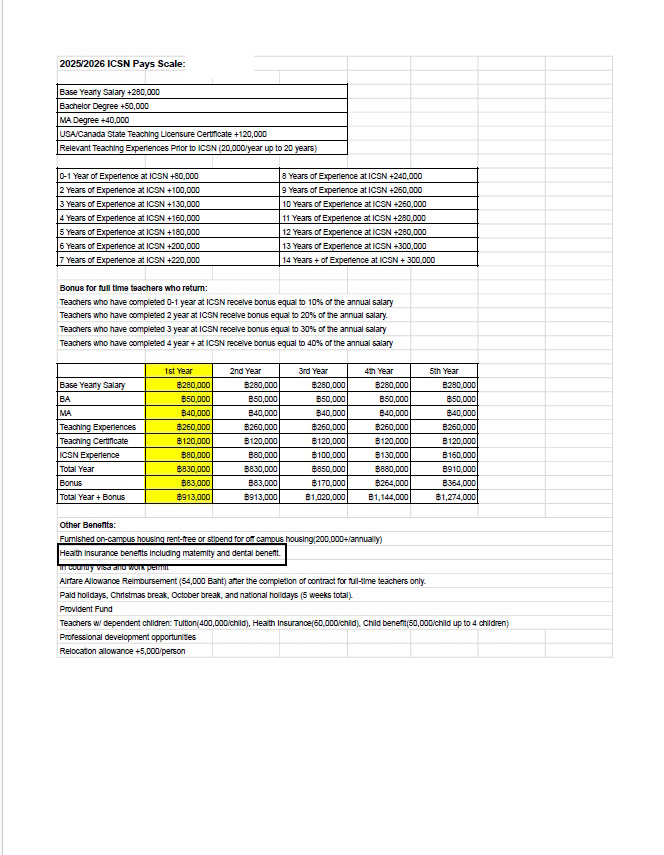
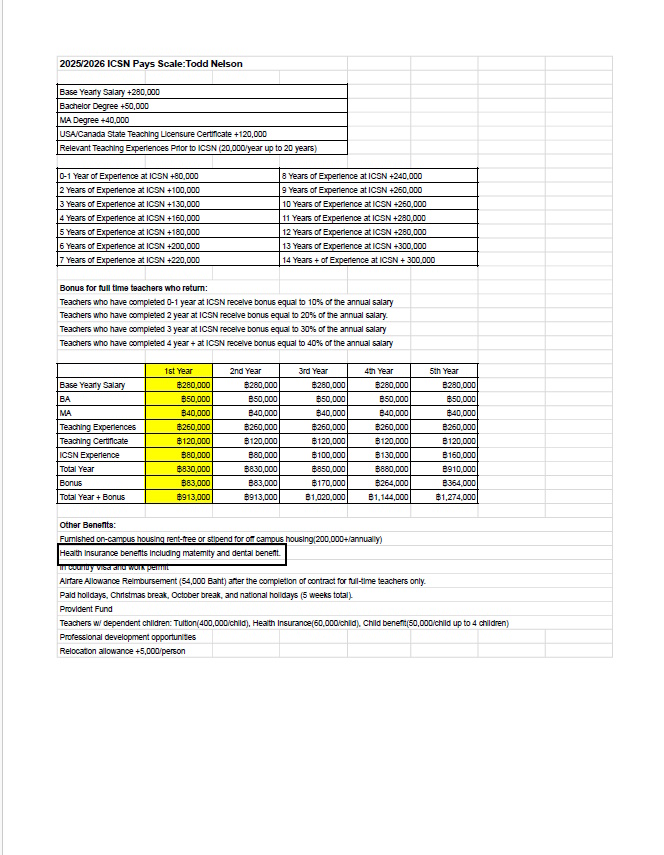
Supporting Documents: Employment Benefits Schedule; Insurance Communication dated August 28, 2025; Coverage Delays and Self-Pay Communications.
Issue: The benefits schedule lists “Health Insurance Benefits including maternity and dental benefit” as an employment benefit. However, the August 28 insurance communication acknowledges policy problems, exclusions, medical documentation requirements, and ongoing negotiations with the insurer. Subsequent communications show the employee seeking hospital treatment while insurance access remained uncertain and reimbursement-based.
Significance: Employees appear to have accepted employment based on advertised insurance benefits that were not fully operational or immediately accessible upon arrival.
Classification: Raises Significant Insurance Administration Concerns
Finding 2 – Reliance on Employee Self-Payment During Medical Need
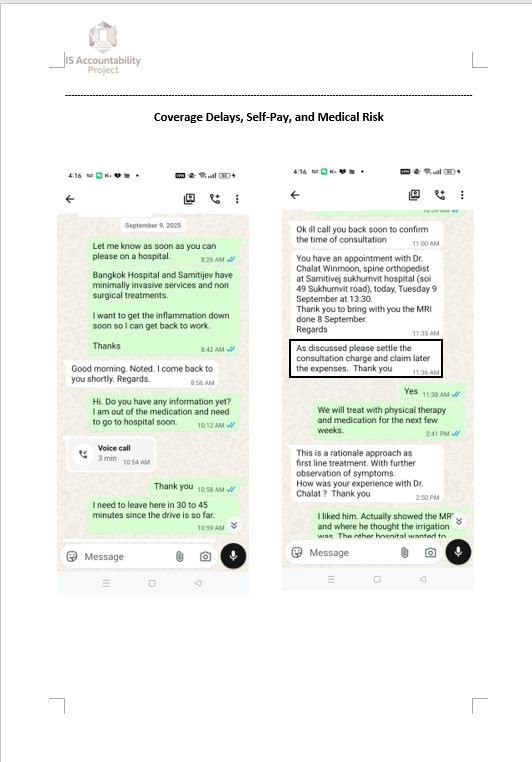
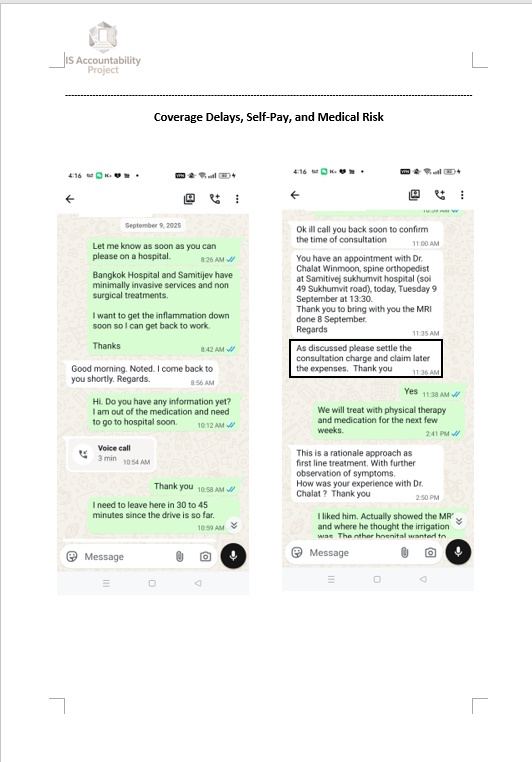
Supporting Documents: Coverage Delays, Self-Pay, and Medical Risk communications.
Issue: Communications indicate the employee was advised to “settle the consultation charge and claim later.” The employee was arranging specialist consultations and hospital visits while insurance coverage remained unresolved.
Significance: Requiring employees to personally fund medical treatment and seek reimbursement later may create barriers to timely medical care, particularly where significant treatment costs are involved.
Classification: Appears Inconsistent with Employee Protection Requirements
Finding 3 – Delayed Resolution of Insurance Problems
Supporting Documents: Insurance Communication dated August 28, 2025.
Issue: School management advised staff that insurance issues had existed since the start of the academic year and required ongoing discussions with the insurer. The communication references multiple policy adjustments, exclusions, and documentation requirements that were still being resolved.
Significance: The communication suggests that insurance coverage arrangements were not fully stabilized when employees began work, potentially leaving staff uncertain regarding medical protection during the opening weeks of employment.
Classification: Raises Significant Insurance Administration Concerns
Finding 4 – Undisclosed Coverage Limitations and Restrictions
Supporting Documents: Insurance Communication dated August 28, 2025.
Issue: The school informed employees that insurer-imposed conditions included:
- Additional medical documentation requirements.
- BMI-related restrictions and charges.
- Exclusions for pre-existing conditions.
The communication further states these conditions would later be removed.
Significance: The existence of significant coverage limitations shortly after employment commenced raises questions regarding whether employees received complete and accurate information about the insurance protection advertised as part of their compensation package.
Classification: Raises Significant Insurance Administration Concerns
Finding 5 – Gap Between Advertised Benefits and Actual Coverage Access
Supporting Documents: Benefits Schedule; Insurance Communication; Coverage Delay Communications.
Issue: The benefits schedule presents health insurance as a standard employment benefit. The contemporaneous communications, however, describe ongoing insurer negotiations, coverage restrictions, reimbursement requirements, and employee-funded treatment.
Significance: The documents suggest a potential disconnect between the insurance benefits described in employment materials and the practical ability of employees to access those benefits when medical treatment was required.
Classification: Appears Inconsistent with Employee Protection Requirements
Finding 6 – Potential Labour Compliance Implications
Supporting Documents: Benefits Schedule; Insurance Communication; Coverage Delay Communications.
Issue: Health insurance appears to have formed part of the overall compensation and recruitment package offered to employees. If employees were required to personally absorb significant medical costs because promised benefits were unavailable, delayed, or materially different from those represented, questions may arise regarding employer obligations toward employee welfare and workplace protections.
Significance: While additional evidence would be required regarding the exact insurance policy terms and implementation dates, the documents raise concerns regarding the adequacy and administration of employee medical protection.
Classification: Raises Significant Labour Compliance Concerns
Overall Assessment
The documents collectively indicate concerns regarding insurance availability, reimbursement-based access to medical care, delayed implementation of promised benefits, and discrepancies between advertised and operational coverage. The strongest evidence relates to employees being instructed to pay medical expenses personally and claim reimbursement later while insurance arrangements were still being resolved, creating potential employee protection and labour compliance concerns.
Claude Sonnett 4.6
Memorandum — Insurance Administration & Employee Protection Concerns (ICSN)
Scope of review
Reviewed: (1) International Christian School Nonthaburi (ICSN) Contract for Employment (pages 1–2), (2) ICSN Pay Scale / Benefits sheet (2025/2026), (3) “Coverage Delays, Self‑Pay, and Medical Risk” WhatsApp screenshot, and (4) ICSN staff email re: “this year’s insurance” (dated Thu Aug 28, 2025; “Insurance Coverage Clarification” content).
Key findings
1) Apparent “self‑pay then claim later” access model and delayed coverage at point of care
Supporting document: “Coverage Delays, Self‑Pay, and Medical Risk” WhatsApp screenshot.
Issue: The communications reflect an expectation that the employee proceeds with consultation/treatment and “claim later,” implying uncertainty or delay in insurer authorization/coverage at the time care is needed. This creates immediate out‑of‑pocket exposure and potential treatment delay.
Significance: High. Even where reimbursement is theoretically available, delayed or uncertain cashless access can functionally reduce coverage and undermine employee protection during urgent or high‑cost care.
Classification: Raises Significant Insurance Administration Concerns.
2) Unclear reimbursement governance (process, timelines, documentation standards, escalation path)
Supporting document: “Coverage Delays, Self‑Pay, and Medical Risk” WhatsApp screenshot.
Issue: The record evidences operational handling of a medical situation but does not show a clear, standardized claim pathway (required documents, pre‑approval rules, timeline commitments, who approves/assists, and appeal/escalation steps). Ad hoc administration increases the risk of inconsistent outcomes and delayed reimbursement.
Significance: Moderate to High. Process ambiguity commonly results in employees bearing costs that should be insured and creates preventable disputes.
Classification: Raises Significant Insurance Administration Concerns.
3) Coverage limitations and differential treatment of “new members,” later reversed (instability of promised benefits)
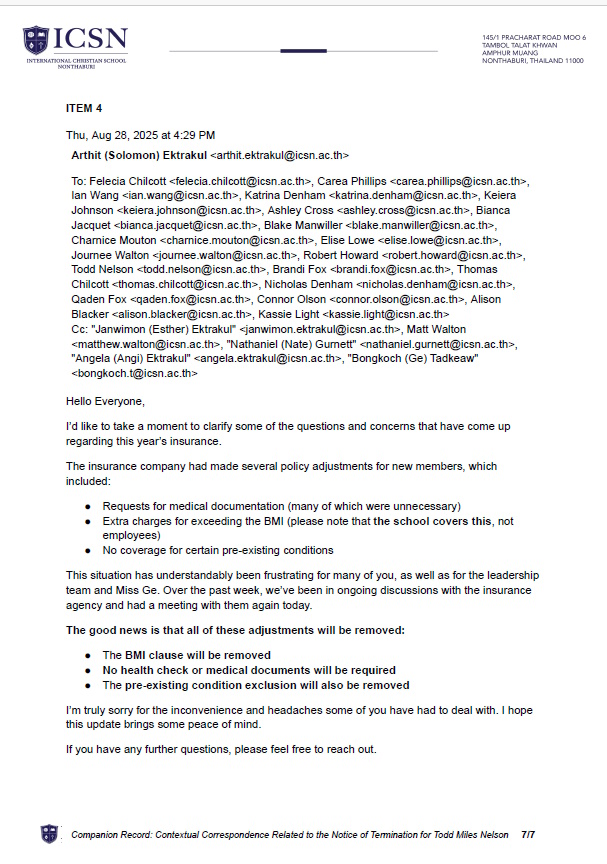
Supporting document: ICSN insurance clarification email (Thu Aug 28, 2025).
Issue: The email states the insurer introduced “policy adjustments for new members,” including (a) requests for medical documentation, (b) BMI‑related extra charges, and (c) non‑coverage for certain pre‑existing conditions—then states these adjustments “will be removed.” This suggests employees may have been onboarded under materially different terms than expected and that coverage conditions were not consistently controlled.
Significance: High. Shifting or unequal terms for subsets of employees can materially reduce protection and indicates weak benefit governance and/or inadequate disclosure at onboarding.
Classification: Appears Inconsistent with Employee Protection Requirements.
4) BMI‑linked extra charges (even if employer intended to cover) create barriers and uncertainty
Supporting document: ICSN insurance clarification email (Thu Aug 28, 2025).
Issue: BMI‑related charging mechanisms can create friction at enrollment/claims and uncertainty over who pays and when, particularly if staff must front costs or if practices vary by case.
Significance: Moderate. The later removal is positive, but the fact it arose indicates inadequate control of insurer practices impacting staff.
Classification: Raises Significant Insurance Administration Concerns.
5) Pre‑existing condition exclusion (even if later removed) is a material protection gap and suggests inadequate disclosure/controls
Supporting document: ICSN insurance clarification email (Thu Aug 28, 2025).
Issue: Excluding pre‑existing conditions is a substantive limitation that can make “health insurance” far less protective in practice; reversing it after concerns suggests employees experienced or feared real coverage denial.
Significance: High. This is a core protection issue, especially for employees relying on employer‑arranged coverage.
Classification: Appears Inconsistent with Employee Protection Requirements.
6) Benefits represented at a high level, while operational records show access problems (misalignment risk)
Supporting documents: ICSN Pay Scale/Benefits sheet (2025/2026) plus WhatsApp screenshot plus ICSN clarification email.
Issue: The benefits sheet lists “health insurance” as a benefit, while the communications show delays, added requirements, and shifting conditions. This raises a risk that the benefit as experienced does not match employees’ reasonable expectations created by the benefits representation.
Significance: Moderate to High. Misalignment increases employee vulnerability and employer dispute exposure.
Classification: Raises Significant Insurance Administration Concerns.
7) Employment contract discretion (termination/compensation adjustments) can compound medical/insurance vulnerability
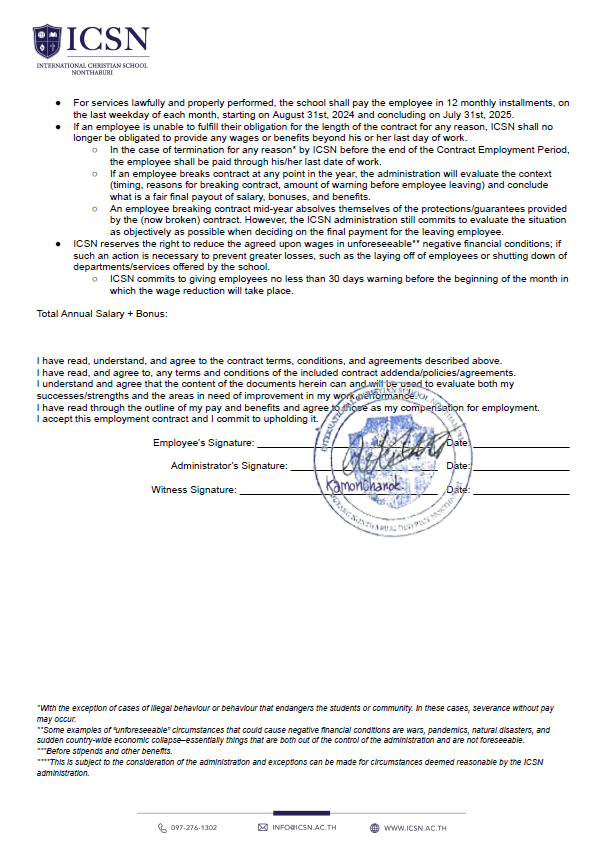
Supporting document: ICSN Contract for Employment (pages 1–2).
Issue: Broad employer discretion to terminate without prior notice (as stated) and references to wage/bonus reduction and benefit cessation upon early separation can intensify risk when employees face medical events—particularly if coverage is already delayed or reimbursement‑based.
Significance: Moderate to High. This combination can leave employees practically unprotected during illness/injury and raises labour‑compliance risk depending on how applied in practice.
Classification: Raises Significant Labour Compliance Concerns.
Overall assessment
Across the records, the primary pattern is unstable and inconsistently administered insurance access (delays, self‑pay dynamics, shifting underwriting rules for new members) combined with employment terms that may amplify vulnerability during health events. The most material concerns are those affecting actual access to care and material coverage exclusions/charges.
Independent AI Insurance Analysis
Review the attached insurance documents, communications, and employment records from a Thai international school.
Identify insurance practices, coverage limitations, reimbursement requirements, employee communications, and benefit arrangements that raise concerns regarding employee protection, insurance administration, or labour compliance.
For each finding:
• Cite the supporting document.
• Explain the issue.
• Assess its significance.
• Classify it as:
- Appears Inconsistent with Employee Protection Requirements
- Raises Significant Insurance Administration Concerns
- Raises Significant Labour Compliance Concerns
Limit the response to approximately one A4 page.