

Executive Administration
Official Communications, Administrative Decisions, and Correspondence
This page contains communications, letters, administrative decisions, and official correspondence associated with Executive Administration at International Christian School Nonthaburi (ICSN). Documents are presented in their original form for review and analysis.

Executive Administration Correspondence
Solomon Ektrakul — Executive Administration, Insurance Communications, Employment Decisions, and Termination Actions
This page documents correspondence involving Solomon Ektrakul and the role of Executive Administration during recruitment, insurance enrollment, medical leave, employment decisions, and termination.
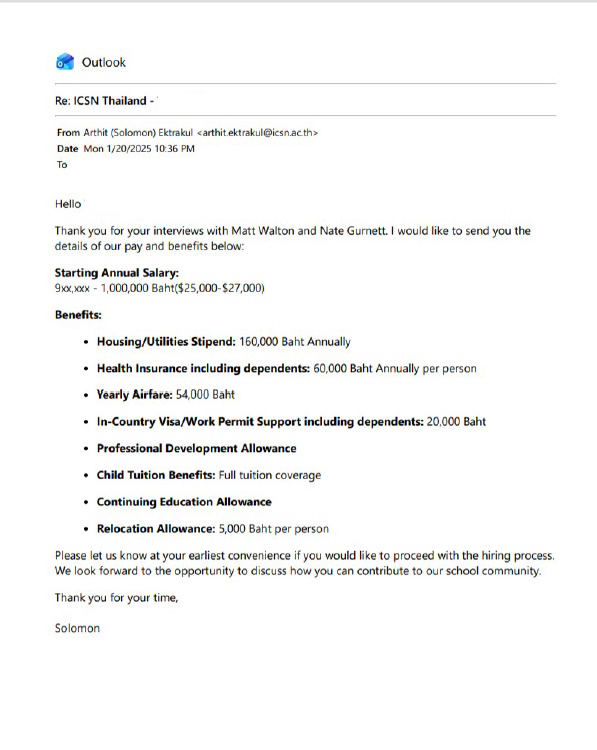
The record begins with recruitment communications in which medical insurance was presented as a key employment benefit. Subsequent correspondence documents delays in insurance activation, confirmation that employees initially lacked coverage, undisclosed policy limitations, and repeated requests for assistance as medical costs escalated.
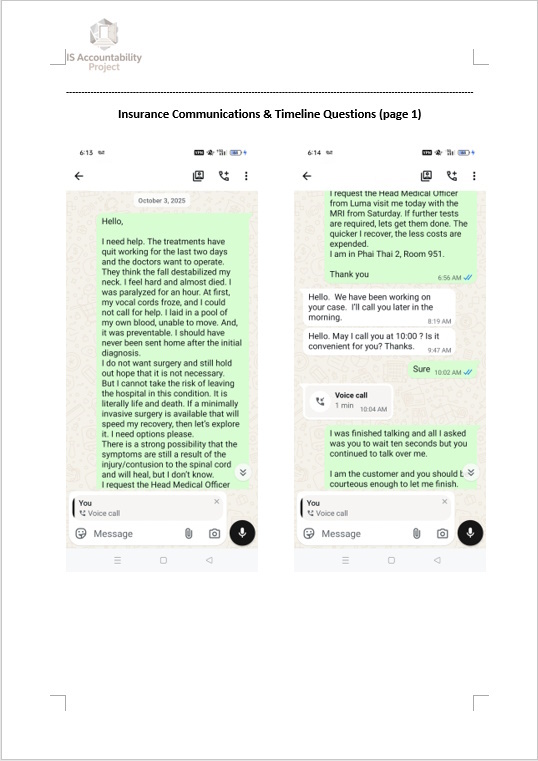
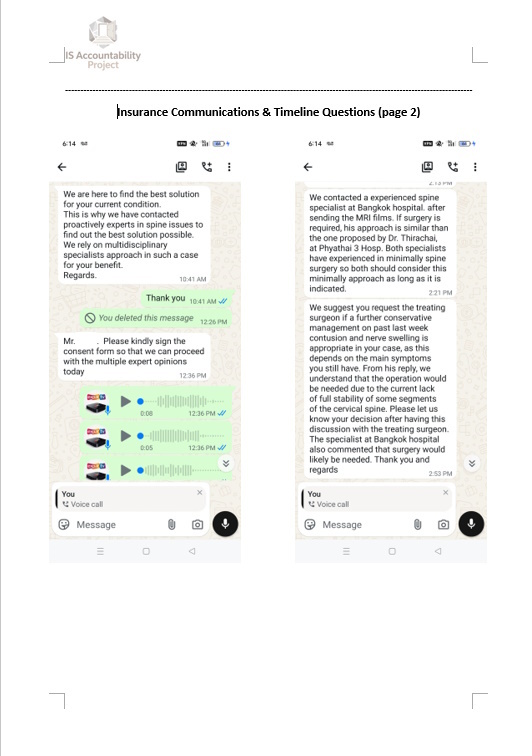
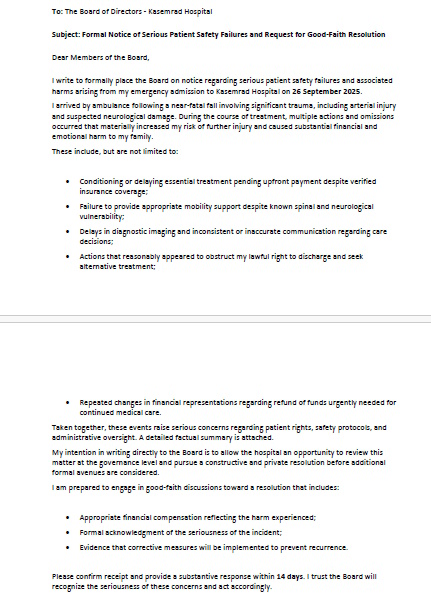
The documents further record communications during a severe medical emergency, including unanswered requests for assistance, discussions regarding insurance coverage, and later employment decisions made while the employee remained hospitalized and recovering from a spinal cord injury.
Several documents raise questions regarding the basis for replacement and termination decisions, including references to anticipated surgery, parent complaints, and extended absence from work. The chronology presented in the record allows readers to compare those explanations with contemporaneous insurance communications, medical records, and administrative correspondence.
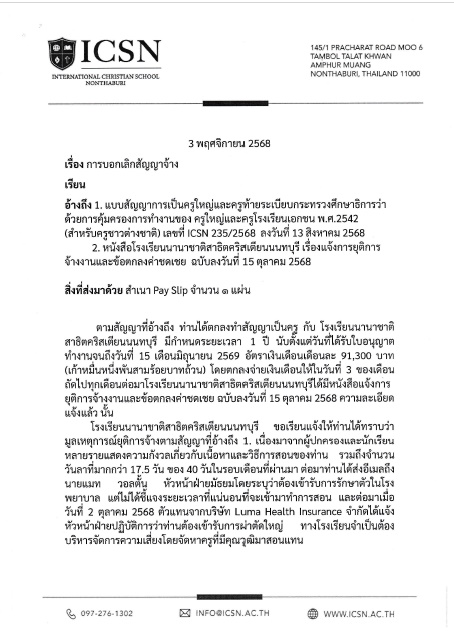
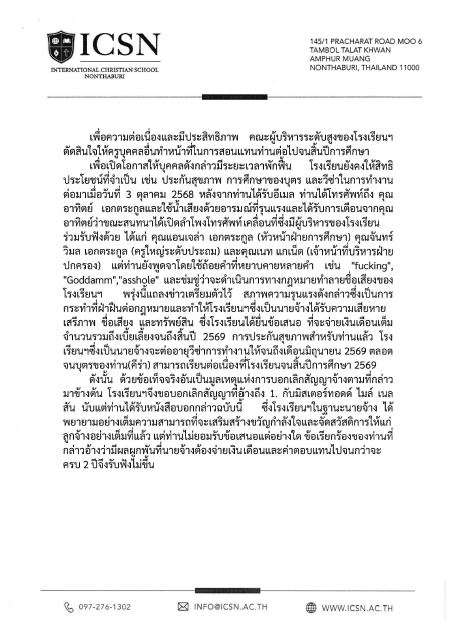
The page also includes documents concerning proposed changes to employment terms, reduction of compensation, medical leave, settlement negotiations, and the final termination notice. Readers are encouraged to review the original documents and supporting evidence and draw their own conclusions regarding the actions taken by Executive Administration.
Overview of the Record
This page documents correspondence involving Solomon Ektrakul, Executive Administration, and International Christian School Nonthaburi (ICSN) concerning recruitment representations, employee medical insurance, emergency medical communications, employment decisions, medical leave, and termination actions.
The record begins with recruitment communications and insurance representations made before employment commenced. It then follows the progression of insurance activation delays, undisclosed policy limitations, escalating medical expenses, requests for assistance during a medical emergency, proposed changes to employment terms, and the eventual termination of employment while the employee was recovering from a spinal cord injury.
Several documents raise questions regarding insurance administration, access to medical treatment, the handling of medical leave, replacement planning before recovery timelines were known, parent complaint allegations, and the consistency of explanations later provided to justify employment decisions.
Readers are encouraged to review the original correspondence, employment records, insurance communications, termination documents, and supporting evidence and draw their own conclusions regarding the actions and decisions reflected in the documentary record.

Recruitment & Insurance
Insurance Representations, Coverage Limitations, and Administrative Communications
- Insurance representations during recruitment
- Policy activation delays
- Coverage limitations
- Administrative communications

Medical Emergency
Treatment Access, Insurance Issues, and Emergency Assistance Requests
- Requests for assistance
- Insurance communications
- Timeline/Dates Inconsistencies
- Treatment access issues

Employment Decisions
Replacement Planning, Contract Changes, and Medical Leave Actions
- Replacement planning
- Salary reduction proposal
- Medical leave questions
- Contract modification issues

Termination & Correspondence
Termination Notice, Parent Complaint Allegations, and Administrative Responses
- Parent complaint allegations
- Termination notice
- Settlement communications
- Administrative responses
Explore Our Correspondence Records
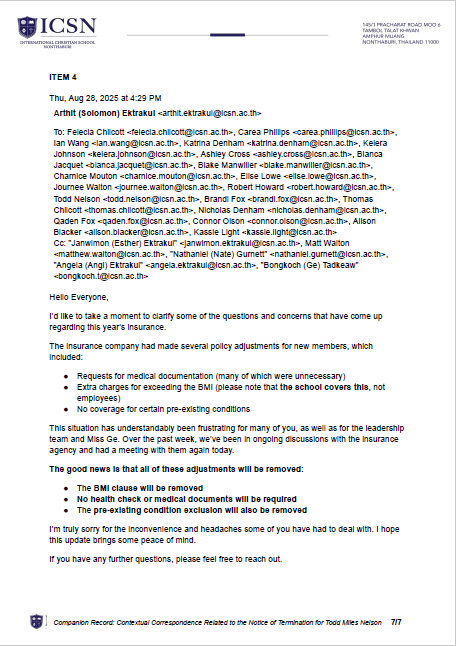
The correspondence begins with recruitment communications representing health insurance as a core employment benefit for employees and their dependents. Subsequent administrative communications acknowledge insurance difficulties affecting newly hired staff, including policy restrictions, delayed implementation, reimbursement requirements, coverage limitations, and additional conditions that had not been fully disclosed during recruitment.
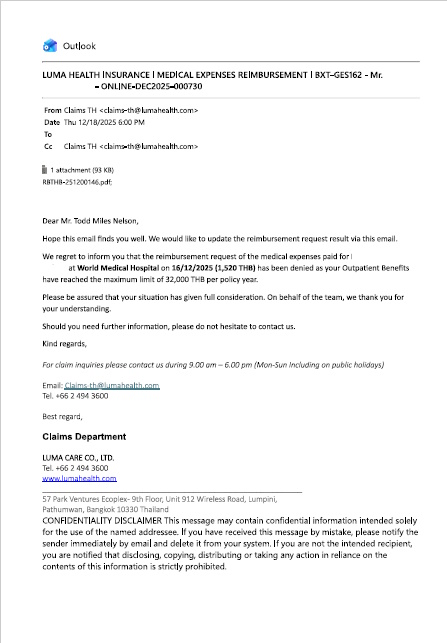
The documentary record indicates that these insurance difficulties affected multiple new employees rather than a single individual. Executive Administration's own communications acknowledge concerns raised by staff regarding insurance enrollment, exclusions, and access to benefits. However, the consequences appear to have been particularly significant in one case, where insurance limitations, delayed coverage, reimbursement requirements, and treatment-access difficulties coincided with a serious medical emergency and escalating medical expenses.
The majority of the documents presented on this page were preserved and provided by a former employee directly involved in the events described. They include recruitment correspondence, insurance communications, medical-related communications, employment records, termination documents, and supporting evidence. Together, these materials provide insight into both broader insurance administration issues affecting staff and the specific impact those issues may have had on individual employees.
Questions raised within the record include the adequacy of insurance disclosure, policy administration, reimbursement limitations, employee understanding of coverage restrictions, and the extent to which employees were informed of significant limitations before accepting employment.
Readers are encouraged to examine the original documents and supporting evidence and draw their own conclusions regarding the actions, communications, and decisions reflected in the record.
Key Findings from the Documentary Record
The documents presented on this page raise questions regarding Executive Administration's handling of employee insurance, medical emergencies, employment decisions, and termination procedures. The following observations are based solely upon the documents included within this record.
Insurance Administration
The correspondence begins with recruitment communications representing health insurance as a core employment benefit for the employee and dependents. Subsequent administrative communications acknowledge insurance difficulties affecting staff, including policy restrictions, delayed implementation, reimbursement requirements, and coverage limitations not disclosed during recruitment.
The record shows that Executive Administration was aware of these insurance difficulties while employees were attempting to obtain medical care. Questions raised within the record include the adequacy of insurance disclosure, policy administration, reimbursement limitations, and the extent to which employees were informed of significant restrictions before accepting employment.
Medical Emergency Response
The record documents repeated requests for assistance during a serious medical crisis. Communications show ongoing discussions regarding treatment options, insurance coverage, specialist consultations, and the financial barriers associated with obtaining medical care.
A significant issue concerns the timeline later cited in the termination correspondence. Executive Administration stated that information available on October 2 indicated major surgery and prolonged absence. However, communications presented within this record indicate that surgery had not yet been determined and remained only one of several treatment options under consideration on October 3.
The record therefore raises questions regarding how conclusions about future surgery and extended absence were reached before a final treatment plan had been established.
Employment Decisions
The documents show that the employee was removed from his AP teaching assignment, replacement arrangements were initiated, and alternative employment terms were proposed during an ongoing medical crisis.
The proposed changes included reassignment to substantially different duties and a reduction in compensation through conversion to a daily-rate structure. These actions were proposed before any documented surgical plan had been finalized and before any documented consultation regarding recovery timelines or workplace accommodations.
The proposed modifications also raise questions under Thai labour law, which generally requires employee consent before material changes are made to employment terms and conditions. The documents presented on this page do not reflect any written acceptance of the proposed salary reduction, reassignment of duties, or alteration of the employee's existing position.
Termination Documentation
The termination correspondence relies heavily upon parent complaints, student concerns, and educational performance issues as justification for dismissal. Yet the documents presented on this page do not contain written complaints, investigation records, disciplinary notices, performance improvement plans, meeting records, witness statements, or other supporting documentation demonstrating that such concerns had been formally documented, investigated, or communicated to the employee before termination.
The record instead reflects that both the school founder and principal had previously advised the employee that parent concerns were not considered significant issues requiring formal intervention. The employee requested opportunities to address the concerns directly but was not provided access to do so.
The documents further raise questions regarding consistency in the administration of medical leave. The termination occurred approximately 17 days after a spinal cord injury and hospitalization, despite Thai labour protections providing employees with paid sick leave rights of up to 30 working days per year. The record also references another senior employee who reportedly received approximately two months of leave without loss of position, duties, or compensation. Readers may therefore consider whether similarly situated employees were treated consistently.